

Black Ribbon Eel
$199.99
Rhinomuraena quaesita
| Care Level | Expert Only |
| Temperament | Semi-aggressive |
| Color Form | Black, Tan, White, Yellow |
| Diet | Carnivore |
| Reef Compatible | With Caution |
| Water Conditions | sg 1.020-1.025, 72-78° F, dKH 8-12, pH 8.1-8.4 |
| Max Size | 4’2″ |
| Family | Muraenidae |
| Minimum Tank Size | 100 gallons |
Live Arrival Guarantee
Description
Black Ribbon Eel
Also known as the Black Ghost Ribbon Eel or Bernis’ Moray
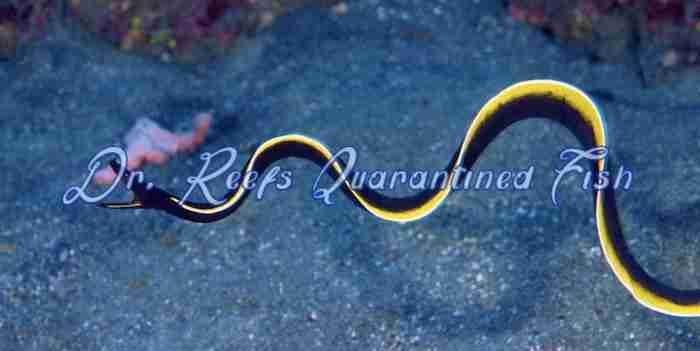
The Black Ribbon Eel is a stunning and ethereal species that brings graceful movement and dramatic coloration to marine aquariums. Native to the Indo-Pacific region, from East Africa to French Polynesia, this elongated eel features a striking jet-black body with bright yellow dorsal fin creating a ribbon-like appearance. While their challenging care requirements and poor survival rates in captivity make them suitable only for expert aquarists, their mesmerizing beauty and fluid swimming motions captivate those willing to provide specialized care.
Key Features
- Scientific Name: Rhinomuraena quaesita
- Common Names: Black Ribbon Eel, Black Ghost Ribbon Eel, Bernis’ Moray
- Adult Size: 36–48 inches (90–120 cm); commonly 30–40 inches in aquariums
- Lifespan: 5–10 years with proper care (challenging to maintain long-term)
- Temperament: Shy and reclusive; generally peaceful
- Reef Compatibility: Reef-safe with caution – may consume small fish
- Minimum Tank Size: 75 gallons minimum (100+ gallons recommended)
- Experience Level: Expert only – extremely difficult to maintain successfully
Habitat & Tank Requirements
Natural Habitat: Found on sandy bottoms near coral reefs, lagoons, and rubble areas at depths of 3–200 feet. Lives in burrows with only head protruding, rarely leaving shelter.
Tank Environment:
- Deep sand bed essential (4–6 inches minimum of fine sand)
- PVC tubes or caves for secure hiding (½–1 inch diameter openings)
- Minimal rockwork to maximize sand area
- Extremely secure, tight-fitting lid with all gaps sealed (escape artists)
- Subdued to moderate lighting preferred
- Low to moderate water flow
- Peaceful environment essential
Water Parameters:
- Temperature: 74–80°F (23–27°C)
- Salinity: 1.023–1.025 specific gravity
- pH: 8.1–8.4
- Ammonia/Nitrite: 0 ppm
- Nitrate: <10 ppm (excellent water quality essential)
- Alkalinity: 8–12 dKH
Diet & Feeding
Recommended Foods (Major Challenge):
- Live grass shrimp, live ghost shrimp (most readily accepted)
- Fresh/frozen shrimp, fish (may require patience to accept)
- Live feeder fish (small, quarantined – use sparingly)
- Silversides, krill (once acclimated)
- Extremely difficult to wean onto frozen foods
- Many specimens refuse to eat in captivity
Feeding Schedule:
- Feed 2–3 times weekly once feeding established
- May refuse food for weeks initially
- Requires patient, persistent feeding attempts
- Target feed directly at burrow entrance
- Use feeding stick to offer food near head
- Poor feeding response is primary cause of mortality
Behavior & Compatibility
Tank Mates:
- Compatible with: Peaceful tangs, angelfish, butterflyfish, wrasses, peaceful triggers, peaceful community fish (4+ inches)
- Caution with: Very small fish (under 3 inches), aggressive species that may harass
- Avoid: Aggressive eels, large predators, fin-nippers, ornamental shrimp (may be consumed)
Social Behavior:
- Extremely shy and reclusive
- Spends nearly all time in burrow with head visible
- Rarely ventures fully into open water
- Peaceful toward appropriately sized tankmates
- Best kept singly
- More active during dawn/dusk hours
- Highly stressed by aggressive tankmates or excessive activity
Reef Compatibility: Generally reef-safe with corals and sessile invertebrates. May consume very small fish (under 2 inches) and ornamental shrimp. Safe with larger peaceful fish.
Color & Development
Coloration: Jet-black to deep charcoal body with bright yellow to golden-yellow dorsal fin running entire length; bright yellow nostrils form distinctive “horns”; juveniles are black (males); sub-adults transition to blue (females); adults may become yellow (mature females) – this species is a protandric hermaphrodite.
Color Phases:
- Black phase (juvenile/male): Jet-black body, yellow dorsal fin
- Blue phase (female): Electric blue body, yellow dorsal fin (extremely rare in aquariums)
- Yellow phase (mature female): All yellow body (almost never seen in captivity)
Color Intensity:
- Most specimens available are black phase males
- Color remains consistent if feeding adequately
- Rapid color dulling indicates stress or starvation
- Excellent water quality maintains vibrant yellow fin
Size & Growth:
- Specimens typically available at 18–30 inches
- Slow growth in captivity due to feeding challenges
- Sex change rarely occurs in aquariums
Why Choose a Quarantined Black Ribbon Eel?
A properly quarantined Black Ribbon Eel is a specimen that has been observed and assessed for critical feeding behavior. Our quarantine protocol includes 6–8 weeks minimum observation (extended for feeding assessment), preventative parasite treatment, feeding establishment verification (most critical factor), dietary conditioning attempts with various foods, and stress reduction protocols.
Additional information
| Service Level | Conditioned |
|---|
Reviews (0)
Only logged in customers who have purchased this product may leave a review.
Shipping & Delivery

Reviews
There are no reviews yet.