

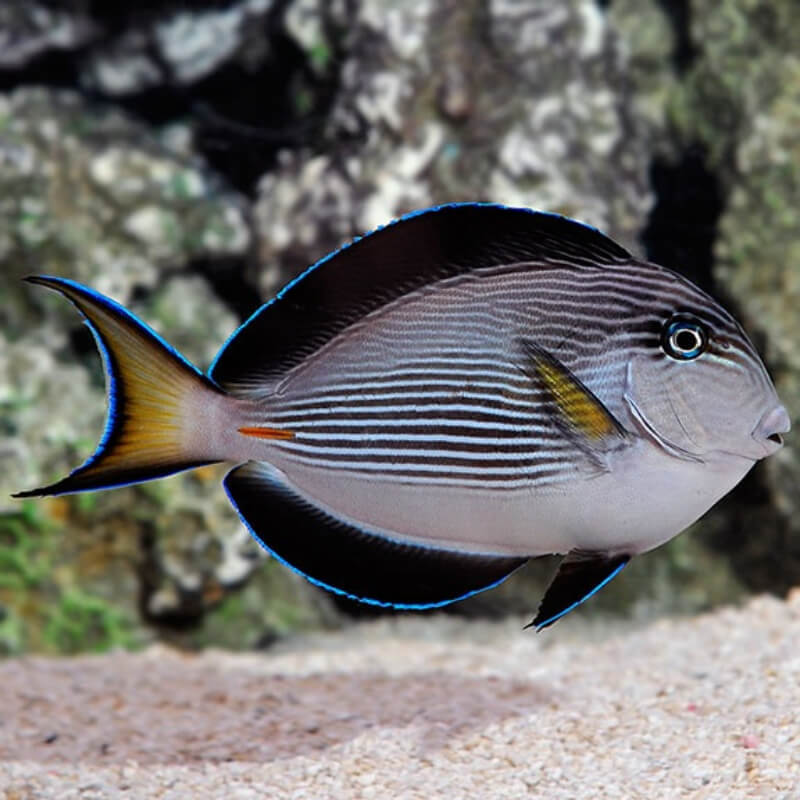
Sohal Tang
$349.99
Acanthurus sohal
| Care Level | Moderate |
| Temperament | Semi-aggressive |
| Color Form | Black, Blue, Green, Yellow |
| Diet | Herbivore |
| Reef Compatible | Yes |
| Water Conditions | sg 1.020-1.025, 72-78° F, dKH 8-12, pH 8.1-8.4 |
| Max Size | 1’4″ |
| Family | Acanthuridae |
| Minimum Tank Size | 250 gallons |
7-Day Guarantee
Approximate Purchase Size: Small: 1-2.5″; Medium: 2.5-3.75″; Large: 4-5″
Sohal Tang
Also known as the Red Sea Sohal Tang or Acanthurus sohal.
The Sohal Tang is one of the most striking and aggressive tangs in the aquarium hobby, admired for its bold horizontal stripes and vivid coloration. Native to the Red Sea and adjacent areas, this species is highly active, territorial, and fast-swimming, making it a challenging but rewarding choice for experienced aquarists. Its dramatic appearance and constant grazing behavior make it a centerpiece in large reef aquariums.
Key Features
- Scientific Name: Acanthurus sohal
- Common Names: Sohal Tang, Red Sea Sohal Tang, Acanthurus sohal
- Adult Size: 12–16 inches (30–40 cm)
- Lifespan: 12–15+ years with excellent care
- Temperament: Aggressive; highly territorial toward other tangs
- Reef Compatibility: Reef-safe
- Minimum Tank Size: 250 gallons
- Experience Level: Advanced
Habitat & Tank Requirements
Natural Habitat:
Found on wave-swept reefs and coral-rich areas of the Red Sea. They thrive in high-energy environments with strong currents and abundant algae for grazing.
Tank Environment:
- Large, open swimming areas with strong water flow
- Plenty of live rock for grazing and hiding
- Stable water parameters with high oxygen levels
- UV sterilizer recommended to reduce parasites
Water Parameters:
- Temperature: 75–82°F (24–28°C)
- Salinity: 1.023–1.026
- pH: 8.1–8.4
- Ammonia/Nitrite: 0 ppm
- Nitrate: <10 ppm
- Alkalinity: 8–12 dKH
Essential Equipment:
- Oversized protein skimmer
- Strong circulation pumps
- UV sterilizer for parasite prevention
- Auto-top-off system for stability
- Regular water changes (15–20% weekly)
Diet & Feeding
Sohal Tangs are primarily herbivorous, grazing continuously on algae. A varied diet helps maintain their health, growth, and vivid coloration.
Recommended Foods:
- Nori sheets (green, red, brown)
- Spirulina-based flakes or pellets
- Frozen herbivore blends
- Occasional mysis or brine shrimp for variety
- Vitamin-enriched foods for immune support
Feeding Schedule:
- Feed 2–3 times daily
- Provide constant access to algae or nori
- Rotate food types for balanced nutrition
Behavior & Compatibility
Sohal Tangs are fast, aggressive, and territorial, particularly toward other tangs. They are best kept singly or with much larger tanks where territorial disputes are minimized.
Tank Mates:
- Compatible with: peaceful, robust community fish, wrasses, gobies, blennies, and anthias
- Caution with: other tangs and semi-aggressive species in confined spaces
- Avoid: multiple Acanthurus tangs in small tanks, very aggressive triggers
Color & Development
Sohal Tangs have a dark blue to gray body with bold horizontal white and orange stripes, striking orange accents on the fins, and a strong caudal peduncle spine. Color intensity improves with proper diet, strong lighting, and minimal stress.
Size & Growth:
Juveniles are typically 3–4 inches and grow steadily to 12–16 inches as adults.
Acclimation & Care Tips
Initial Acclimation:
- Drip acclimate for 45–60 minutes
- Float bag for temperature equalization
- Dim lights during introduction
- Provide immediate access to algae and hiding areas
- Avoid adding to new or unstable tanks
Health Considerations:
Sohal Tangs can be prone to marine ich (Cryptocaryon), marine velvet (Amyloodinium), and HLLE if diet or environment is poor.
Signs of a Healthy Specimen:
- Active swimming and constant grazing
- Clear eyes and smooth fins
- Strong appetite and vivid coloration
- No flashing or labored breathing
Special Considerations
Quarantine is Recommended:
Quarantined Sohal Tangs have a higher survival rate, are conditioned to prepared foods, and are free from parasites. Dr Reef’s quarantine protocol ensures each fish is:
- Observed and treated preventatively
- Conditioned to aquarium diet
- Stabilized before shipment
Breeding Potential
Breeding Sohal Tangs in captivity is extremely rare due to their aggressive and territorial nature. Most spawning behavior occurs only in large, well-established reef systems.
Why Choose a Quarantined Sohal Tang?
Quarantined Sohal Tangs settle faster, eat readily, and adapt better to aquarium life. Their health, coloration, and natural behavior are ensured, giving hobbyists a rewarding experience with this bold and iconic Red Sea species.
| Service Level | Conditioned |
|---|
Only logged in customers who have purchased this product may leave a review.
Related products
Regal Angelfish (Red Sea)(Yellow Belly)
Price range: $299.99 through $369.99
Reviews
There are no reviews yet.