

Geometric Pygmy
$49.99
Plectranthias inermis
| Care Level | Easy |
| Temperament | Peaceful |
| Color Form | |
| Diet | Carnivore |
| Reef Compatible | Yes |
| Water Conditions | sg 1.020-1.025, 72-78° F, dKH 8-12, pH 8.1-8.4 |
| Max Size | 2″ |
| Family | Serranidae |
| Minimum Tank Size | 20 gallons |
Live Arrival Guarantee
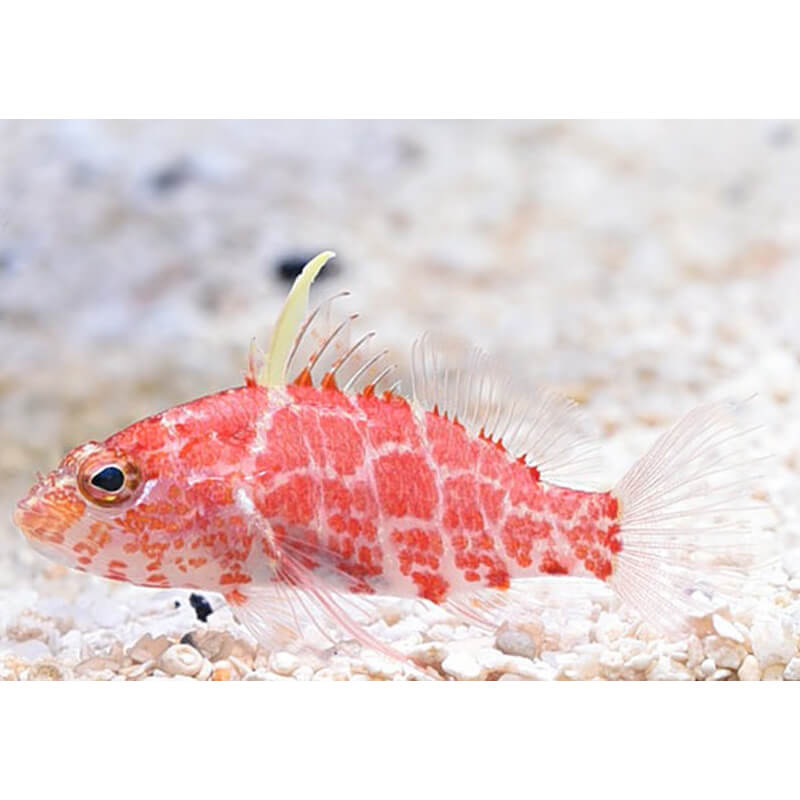
Geometric Pygmy Perchlet
Also known as the Geometric Pygmy Hawkfish or Geometric Basslet
The Geometric Pygmy Perchlet is a tiny and charming species that brings intricate patterning and delightful personality to nano and reef aquariums. Native to the Western Pacific, from Indonesia to Fiji and the Great Barrier Reef, this diminutive perchlet features a cream body adorned with distinctive geometric red-orange patterns creating a captivating mosaic appearance. With their peaceful temperament, nano size, and engaging perching behavior, Geometric Pygmy Perchlets make exceptional additions for intermediate aquarists with established reef systems seeking a unique, reef-safe micro-predator.
Key Features
- Scientific Name: Plectranthias inermis
- Common Names: Geometric Pygmy Perchlet, Geometric Pygmy Hawkfish, Geometric Basslet
- Adult Size: 2–2.5 inches (5–6 cm); commonly 1.5–2 inches in aquariums
- Lifespan: 3–5 years with proper care
- Temperament: Peaceful and shy; timid with larger tankmates
- Reef Compatibility: Reef-safe with caution – may consume very small shrimp
- Minimum Tank Size: 20 gallons minimum (30+ gallons recommended)
- Experience Level: Intermediate – requires established system and careful feeding
Habitat & Tank Requirements
Natural Habitat: Found on coral reefs, reef slopes, and caves at depths of 50–200 feet. Typically perches on coral branches or rocky outcrops in shaded areas.
Tank Environment:
- Branching coral structures or rockwork for perching
- Multiple hiding spots and crevices
- Peaceful environment essential
- Subdued to moderate lighting preferred
- Low to moderate water flow
- Mature reef system recommended
- Fine mesh over overflow to prevent loss
Water Parameters:
- Temperature: 74–78°F (23–26°C)
- Salinity: 1.023–1.025 specific gravity
- pH: 8.1–8.4
- Ammonia/Nitrite: 0 ppm
- Nitrate: <10 ppm (excellent water quality preferred)
- Alkalinity: 8–12 dKH
Diet & Feeding
Recommended Foods:
- Fresh/frozen mysis shrimp, brine shrimp, copepods (primary diet)
- Finely chopped seafood (very small pieces)
- High-quality carnivore pellets (small, slow-sinking)
- Live blackworms, baby brine shrimp (helpful during acclimation)
- Vitamin-enriched frozen preparations
Feeding Schedule:
- Feed 2–3 times daily (small stomach requires frequent meals)
- Very small portions appropriate for tiny size
- Target feed to ensure adequate intake
- Slow eater; ensure no competition from aggressive feeders
- May hunt microfauna naturally
Behavior & Compatibility
Tank Mates:
- Compatible with: Small peaceful gobies, blennies, dartfish, firefish, small cardinalfish, small wrasses (peaceful), clownfish, anthias, nano-reef fish
- Caution with: Aggressive feeders, large fish, other perchlets (may compete), boisterous species
- Avoid: All aggressive species, large predators, fast competitive feeders, fish over 6 inches
Social Behavior:
- Extremely peaceful and shy
- Perches on coral branches or high rockwork
- May be kept singly or in small groups in larger tanks (40+ gallons)
- Often hides when startled
- More active during feeding time
- Less bold than hawkfish species
- Curious but timid personality
Reef Compatibility: Reef-safe with corals and anemones; completely safe with sessile invertebrates. Generally safe with ornamental shrimp over 0.5 inches. May consume very tiny shrimp. Safe with all fish over 1 inch.
Color & Development
Coloration: Cream to pale yellow base with distinctive red-orange to reddish-brown geometric patterns forming squares, rectangles, and maze-like designs; patterns highly variable and unique to each individual; fins may show orange highlights; intricate mosaic appearance.
Color Intensity:
- High-quality diet maintains vibrant pattern colors
- Pattern complexity increases slightly with maturity
- Stress may cause temporary fading
- Excellent water quality preserves pattern clarity
- One of the most intricately patterned small reef fish
Size & Growth:
- Specimens typically available at 1–1.5 inches
- Very slow growth rate
- Reaches adult size within 12–18 months
- One of the smallest perchlet species
Why Choose a Quarantined Geometric Pygmy Perchlet?
A properly quarantined Geometric Pygmy Perchlet is a healthier, acclimated specimen that has been observed, treated, and conditioned for aquarium life. Our quarantine protocol includes 3–4 weeks minimum observation, preventative parasite treatment, dietary conditioning to varied foods, feeding behavior verification (critical for small species), and stress reduction protocols.
These exquisite perchlets combine intricate geometric patterning with charming perching behavior and nano size, making them perfect for peaceful nano and small reef aquariums. Their unique mosaic coloration, gentle temperament, and entertaining personality create engaging observations for patient aquarists. Ideal for established reef systems with peaceful inhabitants where their delicate beauty and small size can be appreciated without the stress of large, aggressive tankmates. A hidden gem for nano-reef enthusiasts seeking unusual, peaceful micro-predators with spectacular patterning.
| Service Level | Conditioned |
|---|
Only logged in customers who have purchased this product may leave a review.
Related products
Regal Angelfish (Red Sea)(Yellow Belly)
Price range: $299.99 through $369.99
Reviews
There are no reviews yet.