

Lavender Tang
$99.99
Acanthurus nigrofuscus
| Care Level | Easy |
| Temperament | Semi-aggressive |
| Color Form | Black, Orange, Purple, Tan |
| Diet | Herbivore |
| Reef Compatible | Yes |
| Water Conditions | sg 1.020-1.025, 72-78° F, dKH 8-12, pH 8.1-8.4 |
| Max Size | 8″ |
| Family | Acanthuridae |
| Minimum Tank Size | 125 gallons |
7-Day Guarantee
Approximate Purchase Size: Small: 1-2.5″; Medium: 2.5-3.75″; Large: 4-5″
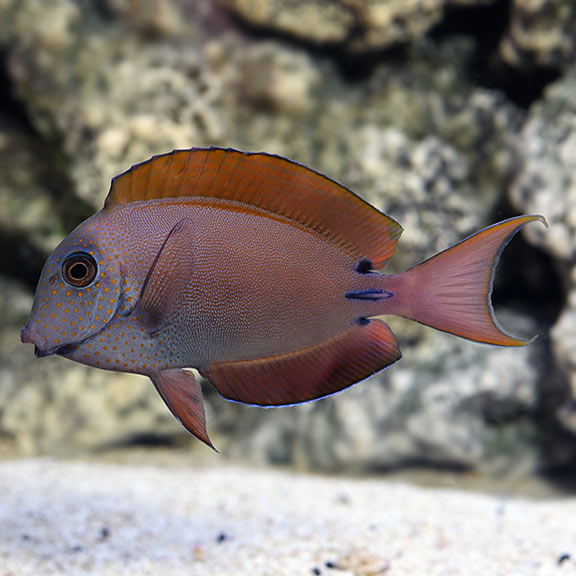
Lavender Tang
Also known as Lavender Surgeonfish or Purple Tang.
The Lavender Tang is a stunning reef tang admired for its soft lavender-purple body and contrasting yellow accents near the tail and fins. Native to the tropical waters of the Indo-Pacific, this tang is hardy, peaceful, and an active swimmer, making it a favorite among intermediate and advanced aquarists. Captive-bred specimens adapt well to aquarium life, offering vibrant coloration and dynamic movement in both reef and FOWLR setups.
Key Features
Scientific Name: Acanthurus nigrofuscus
Common Names: Lavender Tang, Lavender Surgeonfish
Adult Size: 8–10 inches (20–25 cm)
Lifespan: 8–12+ years with proper care
Temperament: Generally peaceful; may show territorial behavior toward other tangs
Reef Compatibility: Reef-safe
Minimum Tank Size: 125 gallons
Experience Level: Intermediate
Habitat & Tank Requirements
Natural Habitat: Found on coral-rich reef slopes and lagoons across the Indo-Pacific, grazing primarily on filamentous algae.
Tank Environment:
- Open swimming areas essential for active tang behavior
- Moderate water flow to mimic natural currents
- Plenty of live rock for grazing and hiding
- Established aquariums recommended (3+ months)
Water Parameters:
- Temperature: 74–82°F (23–28°C)
- Salinity: 1.023–1.025 specific gravity
- pH: 8.1–8.4
- Ammonia/Nitrite: 0 ppm
- Nitrate: <20 ppm
- Alkalinity: 8–12 dKH
Essential Equipment:
- Efficient protein skimmer
- Strong filtration system
- Stable lighting suitable for reef or FOWLR setups
- Regular water changes (10–15% weekly)
Diet & Feeding
Lavender Tangs are primarily herbivorous but will accept prepared foods once acclimated.
Recommended Foods:
- Pellets/Flakes: Algae-based, spirulina, herbivore formulas
- Frozen Foods: Finely chopped marine algae, phytoplankton
- Plant Matter: Nori sheets, spirulina sheets
- Prepared Mixes: Herbivore blends, enriched frozen preparations
Feeding Schedule:
- Feed 2–3 times daily
- Offer portions they can consume in 2–3 minutes
- Variety ensures healthy digestion and vibrant coloration
Behavior & Compatibility
Temperament: Peaceful but may exhibit territorial behavior toward other tangs
Tank Mates: Compatible with most peaceful reef fish including gobies, wrasses, blennies, and non-aggressive tangs. Caution with aggressive tangs or predatory species.
Pairing Behavior: Can be kept singly or in groups in large aquariums. Juveniles adapt more readily to community environments.
Reef Compatibility
- Completely reef-safe; will not harm corals or invertebrates
- Suitable for mixed reef or FOWLR aquariums
Acclimation & Care Tips
Initial Acclimation:
- Drip acclimation over 45–60 minutes
- Float bag for temperature equalization (15–20 minutes)
- Dim lights during introduction
Health Considerations:
- Susceptible to marine ich (Cryptocaryon) if stressed
- Quarantine for 2–3 weeks before adding to display tank
Signs of a Healthy Specimen:
- Active swimming and grazing
- Clear eyes and smooth fins
- Vibrant lavender coloration with yellow accents
Color & Development
Coloration Characteristics:
- Body: Lavender-purple
- Fins: Yellow-tipped or subtle yellow highlights
- Tail: Yellow accent at base and tip
- Eyes: Clear and bright
Color Intensity:
- High-quality diet maintains vibrant coloration
- Proper lighting enhances purple/yellow contrast
- Stress or poor water quality may cause temporary fading
Size & Growth:
- Juveniles start at 3–4 inches
- Reach adult size (8–10 inches) within 12–18 months
Special Considerations
Quarantine is Recommended: Observed for parasites and disease, monitored for appetite and activity, conditioned to prepared aquarium foods.
Captive-Bred Advantages:
- Better adaptation to aquarium life
- Reduced disease risk
- More consistent coloration
- Stronger feeding habits
Breeding Potential:
Breeding Lavender Tangs in captivity is extremely rare. Successful spawning typically occurs only in professional or large-scale reef setups with optimal water quality and abundant grazing surfaces.
Why Choose a Quarantined Lavender Tang?
A fully quarantined Lavender Tang ensures long-term health, fewer stress-related issues, and smooth acclimation into your display tank. Captive-bred, healthy specimens showcase brilliant lavender and yellow coloration, providing an active, visually striking centerpiece for your reef or FOWLR aquarium.
| Service Level | Conditioned |
|---|
Only logged in customers who have purchased this product may leave a review.
Related products
Reviews
There are no reviews yet.