


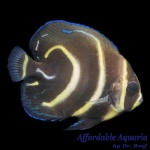

Multibar Angelfish (Captive Bred)
$199.99
Paracentropyge multifasciata
| Care Level | Expert Only |
| Temperament | Semi-aggressive |
| Color Form | |
| Diet | Omnivore |
| Reef Compatible | With Caution |
| Water Conditions | sg 1.020-1.025, 72-78° F, dKH 8-12, pH 8.1-8.4 |
| Max Size | 4.5″ |
| Family | Pomacanthidae |
| Minimum Tank Size | 70 gallons |
Live Arrival Guarantee
Approximate Purchase Size: Small: 1-2″; Medium: 2-3″; Large: 3-4″
Multibar Angelfish (Captive Bred)
Also known as the Many-banded Angelfish or Paracentropyge multifasciata
The captive-bred Multibar Angelfish represents one of the most significant achievements in marine ornamental aquaculture. This rare species, distinguished by its elegant white to pale silver body with numerous vertical black bars has been transformed from one of the hobby’s most challenging and mortality-prone fish into a viable, sustainable option. Raised from larvae in controlled environments, captive-bred specimens eliminate the collection trauma, barotrauma, and extreme acclimation difficulties that plague wild-caught Multibars, making this coveted species accessible while supporting conservation of deep-reef populations.
Key Features
- Scientific Name: Paracentropyge multifasciata (formerly Paracentropyge multifasciata)
- Common Names: Multibar Angelfish, Many-banded Angelfish, Multibarred Angelfish, Barred Angelfish
- Adult Size: Up to 4–5 inches
- Lifespan: 8–15+ years with proper care (dramatically longer than wild-caught specimens)
- Temperament: Peaceful to semi-aggressive; shy but significantly bolder than wild specimens
- Reef Compatibility: Generally reef-safe with caution – less likely to nip at corals than most dwarf angels
- Minimum Tank Size: 75+ gallons preferred
- Experience Level: Intermediate to advanced (far more accessible than wild-caught specimens)
Habitat & Tank Requirements
- Tank Environment: Provide extensive rockwork with caves, crevices, and sheltered areas. While captive-bred Multibars are less reclusive than wild specimens, they still appreciate dim refuges and secure territories reflecting their deep-water origins.
- Water Parameters:
- Temperature: 72–78°F (22–26°C) – captive-bred specimens tolerate normal reef temperatures better than wild fish
- Salinity: 1.023–1.025
- pH: 8.1–8.4
- Ammonia/Nitrite: 0 ppm
- Nitrate: <20 ppm (less sensitive than wild specimens but still appreciate good water quality)
- dKH: 8–12
- Aquascape: Dense live rock formations with multiple hiding spots are beneficial, though captive-bred specimens are notably bolder and spend more time in open areas than wild counterparts. Moderate to low lighting is still preferred.
- Compatibility: Peaceful temperament makes them excellent community fish. Can coexist with other peaceful to semi-aggressive species including small tangs, clownfish, gobies, peaceful wrasses, and cardinalfish. Captive-bred specimens are far less likely to be intimidated by boisterous tank mates. Can sometimes be kept in pairs or small groups, especially if raised together, with higher success rates than wild fish.
Diet & Feeding
Captive-bred Multibar Angelfish are trained on prepared foods from an early age, eliminating the notorious feeding challenges of wild specimens:
- Meaty Foods: Mysis shrimp, vitamin-enriched brine shrimp, finely chopped seafood, copepods, quality marine pellets
- Plant Matter: Marine algae, spirulina, nori sheets, herbivore pellets and flakes
- Specialty Items: Foods containing sponge material (beneficial for long-term health)
- Commercial Foods: High-quality dwarf angelfish pellets and frozen preparations
- Prepared Food Acceptance: Captive-bred specimens readily accept all types of frozen and dry prepared foods from introduction—this is a revolutionary advantage over wild fish
- Natural Grazing: Will graze on microalgae from live rock but are not dependent on it like wild specimens
- Feeding Schedule: Feed 2–3 times daily in small portions. Captive-bred Multibars are eager, enthusiastic eaters that actively compete for food during feeding times.
Notes & Considerations
- Behavior: Captive-bred Multibar Angels are dramatically bolder and more visible than wild-caught specimens. While they still appreciate hiding spots and may be initially reserved, they quickly become confident, swimming openly and actively exploring the aquarium. This represents a complete transformation of the species’ traditionally reclusive nature, captive-bred Multibars actually function as display fish rather than hidden cave dwellers.
- Captive-Bred Advantages:
- Eliminates Collection Trauma: No barotrauma, decompression injuries, or deep-water collection stress—the primary cause of wild specimen mortality
- Revolutionary Feeding Success: Pre-trained on all prepared foods; eliminates the feeding difficulties that doom most wild Multibars
- Superior Hardiness: Dramatically more resilient and adaptable than wild specimens; near-normal survival rates vs. notoriously high wild mortality
- Bold Behavior: Significantly more visible and active; actually observable rather than perpetually hiding
- Disease Resistance: Raised in parasite-free environments with strong immune systems
- Temperature Tolerance: Adapts to normal reef temperatures (74–78°F) without requiring cooler deep-water conditions
- Stress Tolerance: Far more resilient to shipping, acclimation, and tank mate interactions
- Consistent Quality: Raised with optimal nutrition, resulting in excellent coloration and robust health
- Sustainability: Eliminates pressure on rare, difficult-to-access deep-reef populations
- Longevity: Typically outlive wild specimens by many years due to absence of collection trauma and superior nutrition
- Success Rate: Transforms the Multibar from a species with poor survival odds to one with excellent captive prospects
- Ethical Choice: Eliminates concerns about deep-water collection methods and high wild mortality
- Acclimation: Straightforward compared to wild specimens. Standard drip acclimation is sufficient. Captive-bred Multibars typically begin feeding and exploring within hours or days rather than requiring weeks of adjustment or never adapting at all.
- Coral Compatibility: Generally reef-safe and less likely to nip at corals than most Centropyge species due to their specialized natural diet. May occasionally sample coral polyps but rarely causes significant damage. Individual behavior varies, but captive-bred specimens show good reef compatibility overall.
- Coloration: Captive-bred specimens display clean, well-defined barring with excellent contrast between the pale body and dark vertical bars. Colors remain consistent with optimal nutrition and care.
- Light Tolerance: While still preferring moderate lighting, captive-bred Multibars are far more tolerant of standard reef lighting than wild specimens and will remain visible even under brighter conditions.
- Gender: Sexual dimorphism is minimal. Multibar Angels are protogynous hermaphrodites. Successful captive breeding has been achieved by specialized marine fish breeders, representing a major breakthrough for this previously nearly impossible species.
- Social Behavior: Captive-bred specimens can often be kept in pairs or small groups with good success, especially if raised together. This is far more reliable than with wild fish, which are typically too stressed for social housing.
- Disease Resistance: Dramatically more resistant to common marine diseases compared to wild specimens. The extreme stress sensitivity that makes wild Multibars prone to ich and velvet is largely eliminated in captive-bred fish. Standard quarantine protocols are still recommended.
- Tank Maturity: Unlike wild specimens that require mature systems with abundant natural foods, captive-bred Multibars can be successfully added to younger tanks (3+ months old) due to their eager acceptance of prepared foods.
- Visibility & Enjoyment: This may be the biggest practical advantage—captive-bred Multibars are actually enjoyable to observe rather than being “ghost fish” that hide perpetually. They swim openly, actively feed, and display normal fish behavior.
- Availability & Pricing: Captive-bred Multibars command premium pricing due to breeding complexity and limited availability. However, they represent far better value than wild specimens given the dramatically improved survival rates and ease of care. Spending more on a captive-bred specimen that will thrive is more economical than repeatedly attempting (and losing) wild-caught fish.
- Historical Significance: The successful captive breeding and rearing of Multibar Angelfish represents a major milestone in marine aquaculture. This species was considered nearly impossible to keep successfully for decades, with wild specimens having notorious mortality rates. Captive breeding has transformed the Multibar from a species best avoided into one that can actually be recommended—a remarkable achievement.
Why Choose a Captive-Bred & Quarantined Multibar Angelfish?
Our captive-bred Multibar Angelfish are the responsible and practical way to keep this difficult species. Raised from larvae in controlled environments and carefully tested, these fish eat prepared foods easily, are bold and healthy, resist disease, and have a good chance to live long lives. Choosing captive-bred helps support sustainable practices and avoids harming wild populations. These fish are now a much better and more reliable option for serious hobbyists who want to enjoy this beautiful species without the stress of wild collection or difficulty.
| Service Level | Conditioned |
|---|
Only logged in customers who have purchased this product may leave a review.
Related products
Reviews
There are no reviews yet.