

Porcupine Puffer
$99.99
Diodon holocanthus
| Care Level | Moderate |
| Temperament | Semi-aggressive |
| Color Form | Black, Tan, Yellow |
| Diet | Omnivore |
| Reef Compatible | No |
| Water Conditions | sg 1.020-1.025, 72-78° F, dKH 8-12, pH 8.1-8.4 |
| Max Size | 1′ |
| Family | Diodontidae |
| Minimum Tank Size | 180 gallons |
7-Day Guarantee
Porcupine Puffer
Also known as Spot-Fin Porcupinefish, Spiny Puffer, Balloonfish
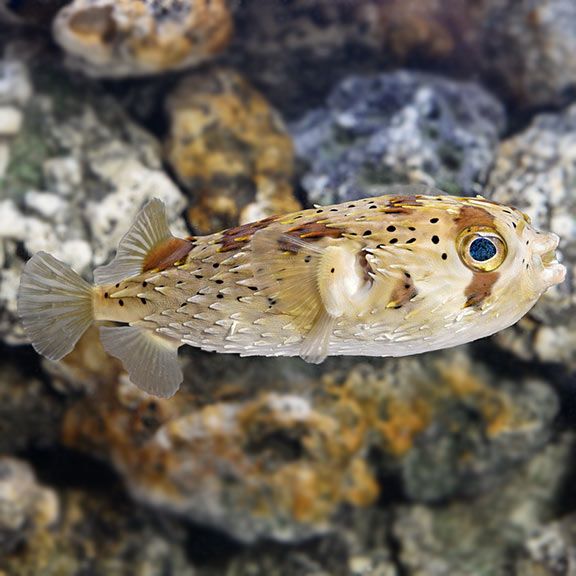
The Porcupine Puffer is one of the most popular and recognizable large puffer species, featuring a tan body covered with short spines and distinctive large, expressive eyes. When threatened, this species can inflate its body dramatically and erect its spines, creating an impressive defensive display. Extremely personable, intelligent, and interactive, this puffer becomes a true pet fish that recognizes its owner and displays remarkable personality.
Key Features
- Scientific Name: Diodon holocanthus
- Common Names: Porcupine Puffer, Spot-Fin Porcupinefish, Balloonfish
- Adult Size: Up to 12-16 inches
- Lifespan: 10-15+ years with proper care
- Temperament: Peaceful for size; very personable
- Reef Compatibility: Not reef safe; will consume all invertebrates
- Minimum Tank Size: 180+ gallons strongly preferred
- Experience Level: Intermediate; requires large system
Habitat & Tank Requirements
Tank Environment: Requires large tanks with substantial open swimming space and rockwork with caves. Moderate to strong water flow. Secure all equipment and decorations. Provide ample territories.
Water Parameters:
- Temperature: 72-78°F (22-26°C)
- Salinity: 1.020-1.025
- pH: 8.1-8.4
- Excellent water quality essential (messy eater)
Equipment Recommendations:
- High-capacity filtration system (heavy bioload)
- Large protein skimmer
- Strong water circulation
- Very secure, heavy lid (can jump)
- Protected equipment
These maintain water quality for this large predator.
Diet & Feeding
Porcupine Puffers are carnivores with powerful beaks requiring hard foods.
Recommended foods include:
- Primary: Frozen krill, squid, clams, mussels, scallops
- Hard-shelled foods: Snails, crabs, shrimp with thick shells (ABSOLUTELY ESSENTIAL)
- Variety: Chopped fish, octopus, crab meat, whole shrimp
- Supplements: Vitamin-enriched foods
Feeding Frequency: Once daily; large portions
Special Note: MUST have regular hard-shelled foods to wear down continuously growing beak. Can crush extremely thick shells. Without a proper diet, beak overgrows severely, requiring veterinary intervention.
Social Structure & Compatibility
- Tankmates: Best with other large, peaceful to semi-aggressive fish
- Generally Peaceful: Relatively peaceful; may eat very small fish
- Predatory: Will consume small tankmates
- Reef Safety: Will eat all invertebrates; not reef compatible
Notes & Considerations
- One of the most popular and beloved large puffer species.
- Covered with short spines that erect when fish inflate.
- Large, expressive eyes give an endearing appearance.
- Can inflate the body dramatically when threatened: Covered with erected spines.
- Inflation is very stressful; never deliberately cause puffing.
- Repeated inflation can cause health problems or death.
- Extremely intelligent and personable: Recognizes owner immediately.
- Develops a strong bond with the keeper; true “pet fish” personality.
- Begs enthusiastically at glass during feeding times.
- Can be trained to hand-feed (use caution; very powerful bite).
- Very curious; watches activity outside the tank constantly.
- May rearrange decorations and investigate everything.
- Beak grows continuously; hard-shelled foods are mandatory.
- Can crush very thick snail shells and large crab shells.
- A powerful beak can inflict serious injury; handle carefully.
- Will eat any fish small enough to swallow.
- Consumes all crustaceans: shrimp, crabs, snails, hermit crabs.
- Not suitable for reef aquariums under any circumstances.
- Produces substantial waste; excellent filtration essential.
- Creates significant ammonia; water quality monitoring critical.
- Can release toxins (tetrodotoxin) when severely stressed.
- Toxin release is rare but potentially lethal to tankmates.
- May jump when startled; very secure lid mandatory.
- Hardy once established; relatively disease-resistant.
- Susceptible to ich and marine velvet; can tolerate copper treatments.
- Long-lived; 10-15+ year commitment with proper care.
- Grows large; requires substantial space.
- Native to circumtropical waters worldwide.
- Excellent centerpiece fish for large fish-only systems.
- One of the most rewarding large puffers to keep.
Why Choose a Quarantined Porcupine Puffer?
Purchasing a quarantined specimen from us means you’re starting with a healthier, properly acclimated puffer. All fish are observed, treated as needed, and trained to accept varied foods including essential hard-shelled items for beak maintenance before sale. This provides the strongest foundation for long-term success with this beloved and interactive species.
| Service Level | Conditioned |
|---|
1 review for Porcupine Puffer
Only logged in customers who have purchased this product may leave a review.
Related products
John Elmore (verified owner) –
Very happy with my Porcupine Puffer, arrived in perfect shape, eating right away. Not stressed at all.