

Achilles Tang
Price range: $499.99 through $599.99
Acanthurus achilles
| Care Level | Expert Only |
| Temperament | Semi-aggressive |
| Color Form | Purple, Tan |
| Diet | Herbivore |
| Reef Compatible | Yes |
| Water Conditions | sg 1.020-1.025, 72-78° F, dKH 8-12, pH 8.1-8.4 |
| Max Size | 8.5″ |
| Family | Acanthuridae |
| Minimum Tank Size | 180 gallons |
Live Arrival Guarantee
Approximate Purchase Size: Large: 4-6″; XL: 6-8″
Achilles Tang
Also known as the Achilles Surgeonfish or Red Tail Tang.
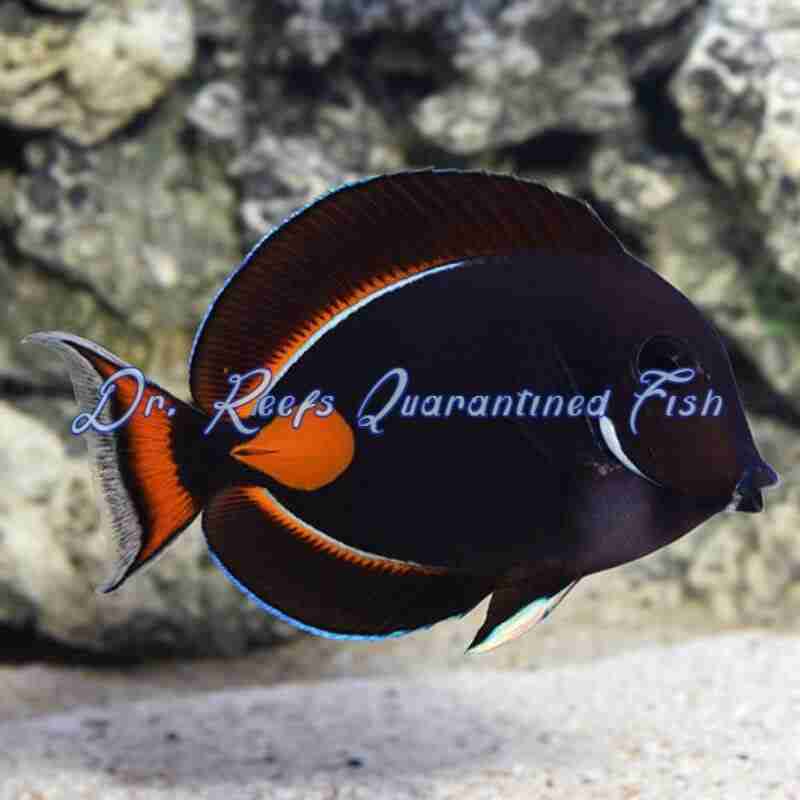
The Achilles Tang is one of the most iconic and visually striking surgeonfish in the hobby, admired for its jet-black body, vivid orange teardrop marking near the tail, and electric blue fin highlights. Native to wave-swept Pacific reefs, this species is known for its speed, grazing behavior, and energetic presence. Though demanding, a properly quarantined Achilles Tang offers unmatched beauty and activity, making it a centerpiece fish for advanced aquarists.
Key Features
Scientific Name: Acanthurus achilles
Common Names: Achilles Tang, Achilles Surgeonfish, Red Tail Tang
Adult Size: 8–10 inches (20–25 cm)
Lifespan: 10–12+ years with excellent care
Temperament: Semi-aggressive; territorial toward other tangs
Reef Compatibility: Reef-safe – will not harm corals or invertebrates
Minimum Tank Size: 125 gallons (180+ recommended for best results)
Experience Level: Advanced – requires pristine water, strong flow, and ample space
Habitat & Tank Requirements
Natural Habitat:
Found on surge zones and wave-exposed reefs throughout the Pacific, especially Hawaii and Polynesia. These fish thrive in oxygen-rich, high-energy environments with constant water movement.
Tank Environment:
- Strong, high-flow environment (gyres or wave pumps recommended)
- Large open swimming space
- Mature tank with heavy rockwork for grazing
- High oxygen levels and stable parameters
- UV sterilizer recommended to reduce parasite load
Water Parameters:
- Temperature: 74–80°F (23–27°C)
- Salinity: 1.023–1.025
- pH: 8.1–8.4
- Ammonia/Nitrite: 0 ppm
- Nitrate: <10 ppm
- Alkalinity: 8–12 dKH
Essential Equipment:
- Oversized protein skimmer
- Strong circulation pumps
- UV sterilizer for parasite prevention
- Auto-top-off for stability
- Regular water changes (15–20% weekly)
Diet & Feeding
Achilles Tangs are herbivores that graze continuously in nature. They require a diet rich in marine algae to maintain health and color.
Recommended Foods:
- Nori sheets (green, red, brown)
- Spirulina-based pellets
- Seaweed clips offered daily
- Frozen herbivore blends
- Occasional mysis or brine shrimp for variety
- Vitamin-soaked foods for immune support
Feeding Schedule:
- Feed 2–3 times daily
- Provide continuous access to algae or nori
- Rotate food types to avoid nutritional gaps
Behavior & Compatibility
Temperament:
Achilles Tangs are active, fast swimmers that may be territorial toward other tangs, especially those of similar shape (Acanthurus and Naso species). Once settled, they are confident, bold, and constantly grazing.
Tank Mates:
Compatible with:
- Peaceful community fish
- Wrasses, anthias, gobies, blennies
- Most reef-safe species
Caution with:
- Other surgeonfish
- Semi-aggressive tangs (Powder Blue, Powder Brown, Goldrim)
Avoid:
- Very aggressive triggers
- Multiple Acanthurus tangs in tight spaces
Color & Development
Coloration Characteristics:
- Deep black body
- Bright orange teardrop patch near caudal peduncle
- Electric blue highlights along fins
- Yellow-orange tail ring
Color Intensity:
Achilles Tangs show their best coloration under strong lighting, proper nutrition, and minimal stress. Poor diet or unstable water can cause dulling or fading.
Size & Growth:
Juveniles are typically 2–3 inches and grow steadily, reaching 8–10 inches in mature aquariums.
Acclimation & Care Tips
Initial Acclimation:
- Drip acclimate for 45–60 minutes
- Float bag for temperature equalization
- Dim lights during introduction
- Provide immediate access to nori and hiding areas
- Do not add to unstable or new tanks
Health Considerations:
Achilles Tangs are prone to:
- Marine ich (Cryptocaryon)
- Marine velvet (Amyloodinium)
- Lymphocystis
- HLLE (Head & Lateral Line Erosion) if diet or environment is poor
Quarantined specimens are far hardier and more stable upon arrival.
Signs of a Healthy Specimen:
- Active, nonstop swimming
- Clear eyes and smooth fins
- Strong appetite
- Deep coloration without blotching
- No flashing or labored breathing
Special Considerations
Quarantine is Recommended:
A properly quarantined Achilles Tang is significantly more likely to thrive, as wild-caught specimens often carry parasites, bacterial infections, or stress-related conditions. Dr Reef’s quarantine protocol ensures each fish is:
- Observed for several weeks
- Treated preventatively when required
- Conditioned to prepared foods
- Stabilized before shipment
Breeding Potential
Breeding the Achilles Tang in home aquariums is extremely uncommon because they need large open spaces and group-spawning conditions that are difficult to recreate. While they may display natural behaviors in a calm and stable environment, true spawning events are rarely observed in captivity.
Why Choose a Quarantined Achilles Tang?
Because Achilles Tangs are sensitive and disease-prone, receiving a quarantined specimen dramatically improves survival, health, and long-term success. With proper preparation, they settle faster, eat readily, and adapt more easily to aquarium life, giving hobbyists a far better experience with this demanding yet stunning species.
| Service Level | Conditioned |
|---|---|
| Size | Large, XL |
Only logged in customers who have purchased this product may leave a review.
Related products

Reviews
There are no reviews yet.