


Asfur Angelfish (Red Sea)
Price range: $259.99 through $349.99
Pomacanthus asfur
| Care Level | Easy |
| Temperament | Semi-aggressive |
| Color Form | Blue, Yellow |
| Diet | Omnivore |
| Reef Compatible | With Caution |
| Water Conditions | sg 1.020-1.025, 72-78° F, dKH 8-12, pH 8.1-8.4 |
| Max Size | 1’4″ |
| Family | Pomacanthidae |
| Minimum Tank Size | 150 gallons |
7-Day Guarantee
Approximate Purchase Size: Small: 1-2.5″; Medium: 2.5-3.75″; Large: 4-5″
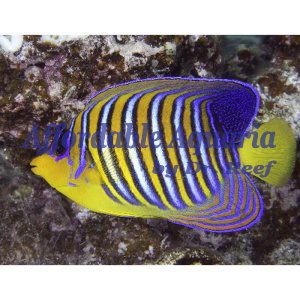
Asfur Angelfish (Adult)
The Asfur Angelfish is a bold and distinctive species endemic to the Red Sea, Gulf of Aden, and Persian Gulf. Adults are immediately recognizable by their deep navy-blue body contrasted with a vibrant yellow bar across the midsection. This hardy and personable angelfish is prized for its striking appearance and interactive personality, making it a centerpiece fish in large marine aquariums.
Key Features
- Scientific Name: Pomacanthus asfur
- Common Names: Asfur Angelfish, Arabian Angelfish, Crescent Angelfish
- Adult Size: 14–16 inches (35–40 cm)
- Lifespan: 15–25+ years with proper care
- Temperament: Semi-aggressive; bold and territorial
- Reef Compatibility: Not reef-safe – will consume corals and sessile invertebrates
- Minimum Tank Size: 150 gallons (minimum); 300+ gallons ideal
- Experience Level: Intermediate to Advanced – requires large tank and stable conditions
Habitat & Tank Requirements
Natural Habitat: Found on coral reefs and rocky outcrops in the Red Sea and adjacent areas at depths of 10–80 feet. Often seen near caves and ledges, typically as solitary individuals or in pairs.
Tank Environment:
- Extensive live rock structure with caves and swim-throughs
- Open swimming areas in the center of the tank
- Multiple territories and visual barriers if keeping with other large fish
- Mature, well-established aquarium (6+ months minimum)
- Strong, varied water flow
Water Parameters:
- Temperature: 72–78°F (22–26°C)
- Salinity: 1.023–1.025 specific gravity
- pH: 8.1–8.4
- Ammonia/Nitrite: 0 ppm
- Nitrate: <20 ppm (lower preferred)
- Alkalinity: 8–12 dKH
- Phosphate: <0.03 ppm
Essential Equipment:
- High-capacity protein skimmer
- UV sterilizer (recommended for parasite prevention)
- Efficient biological filtration
- Consistent water change schedule (15–20% biweekly)
Diet & Feeding
Asfur Angelfish are omnivorous with a preference for sponge material in the wild, requiring a varied diet for optimal health and coloration.
Recommended Foods:
- Pellets/Flakes: High-quality marine angelfish pellets, spirulina-based formulas
- Frozen Foods: Mysis shrimp, enriched brine shrimp, krill, chopped squid, clams, scallops, marine fish flesh
- Plant Matter: Nori sheets, spirulina, marine macro algae (essential component)
- Specialty Foods: Sponge-based frozen preparations, angelfish formula blends
- Fresh Foods: Occasional fresh seafood (avoid freshwater sources)
- Supplements: Vitamin-enriched foods, garlic supplements for immune support
Feeding Schedule:
- Feed 2–3 times daily
- Provide herbivore diet at least 30–40% of total intake
- Clip nori sheets to tank glass for grazing
- Variety is crucial to prevent nutritional deficiencies
Note: In nature, Asfur Angels consume primarily sponges and tunicates. Including sponge-based foods helps replicate their natural diet and maintains vibrant coloration.
Behavior & Compatibility
Temperament:
- Bold and outgoing once acclimated
- Highly territorial, especially toward other angelfish
- Generally peaceful with non-angelfish species
- Will establish and defend territories in the aquarium
- One of the more assertive Pomacanthus species
Tank Mates:
- Compatible with: Large tangs, wrasses, triggerfish (non-aggressive species), groupers, snappers, large butterflyfish, lionfish
- Caution with: Smaller peaceful fish may be intimidated; introduce Asfur last
- Avoid: Other large angelfish (especially Pomacanthus species), dwarf angelfish in smaller tanks, overly aggressive species
Aggression Management:
- Introduced as one of the last fish to the display
- Provide multiple territories with visual breaks
- Tanks over 300 gallons may house multiple large fish successfully
- Monitor closely during introduction period
Reef Compatibility:
- Not reef-safe: Will eat most corals including SPS, LPS, and soft corals
- Consumes zoanthids, palythoas, mushroom corals
- May pick at clam mantles and other sessile invertebrates
- Best suited for FOWLR (Fish Only With Live Rock) systems
Acclimation & Care Tips
Initial Acclimation:
- Extended drip acclimation over 2–3 hours
- Dim lighting for first 24–48 hours
- Minimize tank traffic and disturbances for first week
- Add to established aquarium with stable parameters
- Introduce as last or near-last fish to display
Health Considerations:
- Susceptible to marine ich (Cryptocaryon irritans) and velvet (Amyloodinium ocellatum)
- Prone to lateral line erosion (HLLE) if water quality deteriorates or diet is inadequate
- Maintain pristine water conditions
- Quarantine for 6–8 weeks before introducing to display tank
- UV sterilization helps reduce parasite load
Signs of a Healthy Specimen:
- Active, confident swimming behavior
- Bold feeding response
- Deep, rich coloration (navy blue with vibrant yellow bar)
- Clear, bright eyes
- No visible parasites, spots, or lesions
- Smooth fins without fraying
- Responsive to movement outside tank
Color & Development
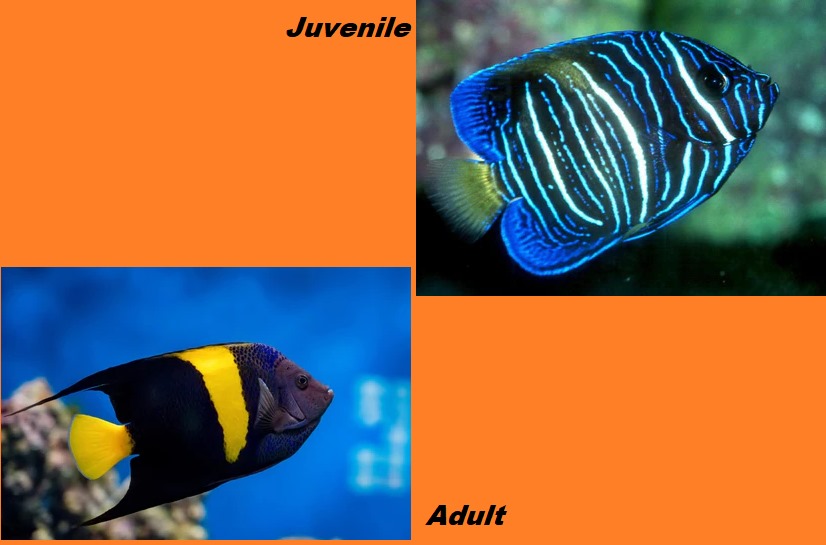
Juvenile Coloration: Juveniles display a pattern of vertical white and blue curved lines on a dark blue to black background, similar to other Pomacanthus juveniles. They lack the characteristic yellow bar.
Subadult Transition: Around 3–4 inches, the yellow bar begins to appear, starting as a small patch that expands with growth.
Adult Coloration: Full adult coloration develops by 5–6 inches and features:
- Deep navy-blue to purple-blue body
- Bright yellow vertical bar across midsection (the “asfur” marking)
- Yellow-tipped pectoral fins
- Blue markings on face and gill covers
- Dark caudal fin with blue accents
The yellow bar continues to intensify and may develop a slight curve with age.
Special Considerations
Geographic Considerations: As a Red Sea endemic species, Asfur Angelfish may be subject to collection regulations. Always verify the source and legality of specimens.
Size Planning: These fish grow large and require substantial tank volume. Purchasing for a smaller tank with plans to “upgrade later” often leads to stunted growth, aggression issues, or rehoming difficulties.
Personality: Asfur Angels often develop distinct personalities and may recognize their owners. They can become quite interactive, often swimming to the front of the tank during feeding time or when their keeper approaches.
Longevity Commitment: With lifespans exceeding 20 years in captivity, an Asfur Angelfish represents a long-term commitment requiring consistent care and stable conditions.
Quarantine Protocol
Why Quarantine is Critical: Asfur Angelfish, like all large angelfish, are highly sensitive to shipping stress and prone to parasitic infections. A proper quarantine period dramatically improves survival rates.
Our Quarantine Process:
- Observation Period: 6–8 weeks minimum
Default size: Medium
| Size | Small, Med, Large |
|---|
Only logged in customers who have purchased this product may leave a review.
Related products

Reviews
There are no reviews yet.