

Bicolor Foxface
$119.99
Siganus uspi
| Care Level | Moderate |
| Temperament | Peaceful |
| Color Form | |
| Diet | Herbivore |
| Reef Compatible | With Caution |
| Water Conditions | sg 1.020-1.025, 72-78° F, dKH 8-12, pH 8.1-8.4 |
| Max Size | 10″ |
| Family | Siganidae |
| Minimum Tank Size | 125 gallons |
7-Day Guarantee
Bicolor Foxface
Also known as Bicolor Rabbitfish, Fiji Foxface
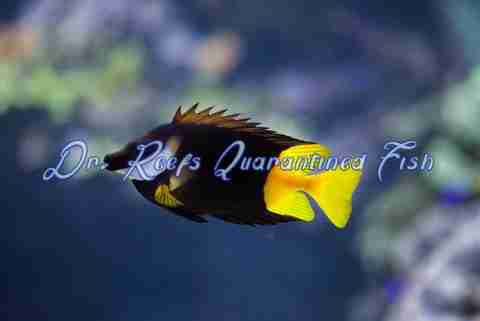
The Bicolor Foxface is a stunning and highly sought-after species featuring a distinctive two-tone coloration: bright yellow front half transitioning sharply to dark grey-black posterior. This hardy, peaceful herbivore is an exceptional algae controller with a bold personality and striking appearance. Like all foxface species, it possesses venomous dorsal spines requiring careful handling. The dramatic color division makes this one of the most visually striking rabbitfish available.
Key Features
- Scientific Name: Siganus uspi
- Common Names: Bicolor Foxface, Bicolor Rabbitfish, Uspi Spinefoot
- Adult Size: Up to 9-10 inches
- Lifespan: 8-12 years with proper care
- Temperament: Peaceful; shy initially but becomes bold
- Reef Compatibility: Reef safe with caution; may nip at corals if underfed
- Minimum Tank Size: 125+ gallons preferred
- Experience Level: Intermediate; venomous spines require careful handling
Habitat & Tank Requirements
Tank Environment: Provide ample swimming space with substantial live rock formations for grazing and shelter. Include caves and overhangs for security and nighttime resting. Strong water flow and excellent water quality. Established systems with natural algae growth ideals. Complex aquascaping provides grazing surfaces and reduces stress.
Water Parameters:
- Temperature: 72-78°F (22-26°C)
- Salinity: 1.020-1.025
- pH: 8.1-8.4
- Stable, pristine water conditions essential
Equipment Recommendations:
- Quality filtration system
- Protein skimmer
- Moderate to strong water circulation
- Natural algae growth beneficial
These maintain optimal conditions for this active herbivore.
Diet & Feeding
Bicolor Foxface are primarily herbivores requiring frequent feeding.
Recommended foods include:
- Primary: Marine algae sheets (nori), dried seaweed
- Fresh Foods: Fresh marine macroalgae (Gracilaria, Caulerpa, Ulva)
- Staples: Spirulina flakes, herbivore pellets, algae wafers
- Supplemental: Veggie-based frozen foods, blanched vegetables
- Occasional: Small amounts of meaty foods (mysis shrimp, brine shrimp)
Feeding Frequency: 2-3 times daily; constant grazing species
Special Note: Outstanding algae eater; will consume hair algae, bubble algae, and various nuisance algae. Must have constant access to algae or frequent feedings to prevent coral nipping. One of the best natural algae controllers available.
Social Structure & Compatibility
- Tankmates: Peaceful toward most fish species; excellent community fish
- Shy Initially: May hide frequently when first introduced but becomes confident
- Territorial: May be aggressive toward other foxface or rabbitfish species
- Solitary: Best kept as single specimen unless tank is very large
- Reef Behavior: Generally reef safe but may occasionally sample soft corals if hungry
Notes & Considerations
- Absolutely stunning coloration: Sharp division between bright yellow front and dark grey-black rear.
- Color boundary typically occurs at mid-body creating a dramatic two-tone effect.
- One of the most visually striking foxface species available.
- Relatively rare compared to standard foxface; commands premium prices.
- Native to Fiji and nearby Pacific islands; limited collection range.
- Outstanding algae controller for reef aquariums.
- Eagerly consumes hair algae, bubble algae, and other nuisance species.
- Will graze constantly on live rock surfaces.
- VENOMOUS SPINES: Dorsal spines contain potent venom.
- Spine stings are extremely painful; can cause severe localized pain and swelling.
- Pain can persist for several hours; may require medical attention in severe cases.
- Always exercise extreme caution when handling or maintaining a tank.
- Never attempt to handle it with bare hands.
- Use nets carefully; be aware of spine locations at all times.
- Hot water immersion (as hot as tolerable) helps break down venom and relieve pain.
- Keep first aid supplies readily available.
- Spines are purely defensive.
- Initially shy and may hide frequently after introduction.
- Becomes bold and confident once acclimated; often centerpiece fish.
- Generally very peaceful toward other species.
- May become territorial toward other foxface or rabbitfish species.
- Best kept as a single foxface unless the tank is exceptionally large (180+ gallons).
- Active swimmer once comfortable; patrols tank while grazing.
- May nip at soft corals, zoanthids, or LPS if severely underfed (rare with proper feeding).
- Generally leaves SPS corals completely alone.
- Proper feeding prevents coral nipping behavior.
- Displays dramatic color change at night: develops mottled brown camouflage pattern.
- Nighttime color change is completely normal; returns to vibrant coloration in the morning.
- Often sleeps wedged into rockwork or caves.
- May display stress coloration (mottled pattern) when frightened; recovers quickly.
- Hardy once established; relatively disease-resistant.
- Smaller adult size than standard foxface makes it suitable for smaller tanks.
- Can grow quickly with proper feeding.
- Long-lived with proper care.
- Adapts readily to prepared foods.
- Bold personality often becomes interactive and recognizes the owner.
- May beg for food at glass during feeding times.
Why Choose a Quarantined Bicolor Foxface?
Purchasing a quarantined specimen from us means you’re starting with a healthier, well-acclimated fish. All fish are observed, treated as needed, and trained to accept varied prepared algae-based foods before sale. Proper quarantine is especially important for shy species like foxface, allowing them to acclimate in a stress-free environment before introduction to display tanks. This provides the strongest foundation for long-term success with this spectacular and functional species. Always exercise extreme caution around venomous spines.
| Service Level | Conditioned |
|---|
Only logged in customers who have purchased this product may leave a review.
Reviews
There are no reviews yet.