

Longhorn Cowfish
$59.99
Lactoria cornuta
| Care Level | Expert Only |
| Temperament | Peaceful |
| Color Form | White, Yellow |
| Diet | Omnivore |
| Reef Compatible | With Caution |
| Water Conditions | sg 1.020-1.025, 72-78° F, dKH 8-12, pH 8.1-8.4 |
| Max Size | 1’8″ |
| Family | Ostraciidae |
| Minimum Tank Size | 250 gallons |
Live Arrival Guarantee
Description
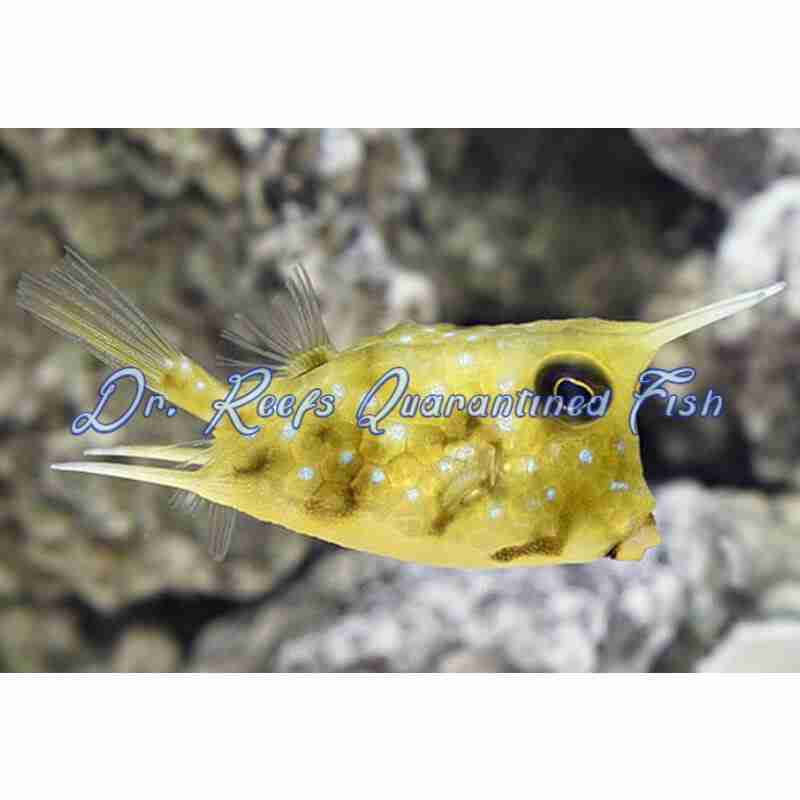
Longhorn Cowfish
Also known as the Horned Boxfish or Long-Horned Cowfish
The Longhorn Cowfish is a quirky and charismatic species that brings unique personality and unusual appearance to marine aquariums. Native to the Indo-Pacific region, from the Red Sea to Hawaii and the Eastern Pacific, this distinctive fish features a box-shaped body with prominent horn-like projections and endearing swimming behavior. While their specialized care requirements and potential toxin release make them challenging, their intelligent personality and amusing antics make them rewarding additions for experienced aquarists with appropriate large, peaceful systems.
Key Features
- Scientific Name: Lactoria cornuta
- Common Names: Longhorn Cowfish, Horned Boxfish, Long-Horned Cowfish
- Adult Size: 16–20 inches (40–50 cm); commonly 12–16 inches in aquariums
- Lifespan: 8–12 years with proper care
- Temperament: Peaceful and curious; slow-moving and docile
- Reef Compatibility: Not reef-safe – may nibble corals and will consume invertebrates
- Minimum Tank Size: 180 gallons minimum (250+ gallons recommended for adults)
- Experience Level: Advanced to Expert – requires specialized care and precautions
Habitat & Tank Requirements
Natural Habitat: Found in lagoons, protected bays, seagrass beds, and sandy areas near reefs at depths of 3–150 feet. Often observed slowly hovering over sandy bottoms searching for food.
Tank Environment:
- Large open swimming areas essential
- Smooth, rounded rockwork (no sharp edges)
- Sandy substrate preferred
- Peaceful environment required
- Moderate water flow
- Well-secured equipment (curious and may investigate)
- Oversized filtration with protein skimmer and chemical filtration (activated carbon)
Water Parameters:
- Temperature: 74–80°F (23–27°C)
- Salinity: 1.023–1.025 specific gravity
- pH: 8.1–8.4
- Ammonia/Nitrite: 0 ppm
- Nitrate: <20 ppm
- Alkalinity: 8–12 dKH
Diet & Feeding
Recommended Foods:
- Fresh/frozen mysis shrimp, brine shrimp, krill (primary diet)
- Chopped clams, mussels, scallops, squid
- Marine algae, nori sheets (supplementary)
- High-quality marine omnivore pellets
- Live blackworms (occasional treat)
- Varied diet essential for health
Feeding Schedule:
- Feed 2–3 times daily
- Small, frequent meals preferred
- Slow eater; ensure adequate feeding time
- May require target feeding with aggressive tankmates
- Will forage on live rock between feedings
Behavior & Compatibility
Tank Mates:
- Compatible with: Large peaceful tangs, angelfish, butterflyfish, peaceful wrasses, large peaceful gobies, peaceful triggers, rabbitfish
- Caution with: Aggressive feeders, nippy species (triggers, large angels that may bite fins), fast-moving competitive feeders
- Avoid: All aggressive species, fin-nippers, pufferfish, large predators, multiple cowfish
Social Behavior:
- Very curious and interactive with owner
- Slow, deliberate swimming style
- May recognize and follow owner
- Peaceful but clumsy; may bump into tankmates unintentionally
- Best kept as single specimen
- Docile and easily stressed by aggression
Color & Development
Coloration: Bright yellow to golden-yellow body with blue spots and markings; white to pale underside; two prominent forward-projecting horns above eyes; two rear-projecting horns near tail; hexagonal plate-like scales creating box appearance; juveniles brighter yellow with more vivid blue spots.
Color Intensity:
- High-quality varied diet maintains vibrant yellow
- Stress causes rapid color fading
- Blue spots become more prominent with age
- Excellent water quality essential for optimal coloration
- Color dulls significantly before toxin release (critical warning sign)
Size & Growth:
- Juveniles typically available at 3–5 inches
- Moderate growth rate: 2–4 inches annually
- Reach 10–14 inches within 3–4 years
- Horns become more prominent with maturity
Why Choose a Quarantined Longhorn Cowfish?
A properly quarantined Longhorn Cowfish is a healthier, less stressed specimen that has been observed, treated, and conditioned for aquarium life. Our quarantine protocol includes 4–6 weeks minimum observation (critical for stress assessment), preventative parasite treatment, dietary conditioning to varied foods, stress tolerance evaluation, and behavioral assessment to ensure stable temperament.
These charming fish combine endearing personality with unique appearance, making them captivating additions for experienced aquarists who can provide large, peaceful systems. Their intelligent, curious nature and amusing hovering behavior create engaging interactions, but success requires commitment to their specialized needs, excellent water quality, and absolute prevention of stress to avoid the risk of toxin release. Perfect for dedicated aquarists seeking an unusual, personable centerpiece with truly one-of-a-kind character.
Additional information
| Service Level | Conditioned |
|---|
Reviews (0)
Only logged in customers who have purchased this product may leave a review.
Shipping & Delivery
Related products
Select options
This product has multiple variants. The options may be chosen on the product page
Select options
This product has multiple variants. The options may be chosen on the product page
Select options
This product has multiple variants. The options may be chosen on the product page
Select options
This product has multiple variants. The options may be chosen on the product page
Select options
This product has multiple variants. The options may be chosen on the product page
Reviews
There are no reviews yet.