


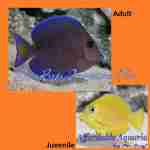
Mimic Lemon Peel Tang
$99.99
Acanthurus pyroferus
| Care Level | Easy |
| Temperament | Semi-aggressive |
| Color Form | Blue, Yellow |
| Diet | Herbivore |
| Reef Compatible | Yes |
| Water Conditions | sg 1.020-1.025, 72-78° F, dKH 8-12, pH 8.1-8.4 |
| Max Size | 8″ |
| Family | Acanthuridae |
| Minimum Tank Size | 125 gallons |
7-Day Guarantee
Approximate Purchase Size: Small: 1-2.5″; Medium: 2.5-3.75″; Large: 4-5″
Mimic Lemon Peel Tang
Also known as the Mimic Yellow Tang or Mimic Zebrasoma.
The Mimic Lemon Peel Tang is a vibrant reef tang recognized for its bright yellow body, slender profile, and subtle mimicry markings that differentiate it from the standard Lemon Peel Tang. Native to the Indo-Pacific reefs, particularly around Indonesia and the Philippines, this active and hardy tang is prized for its peaceful temperament, algae-grazing efficiency, and striking coloration. Captive-bred specimens adapt well to aquariums and are an excellent choice for intermediate and advanced reef hobbyists.
Key Features
Scientific Name: Acanthurus pyroferus
Common Names: Mimic Lemon Peel Tang, Mimic Yellow Tang, Mimic Zebrasoma
Adult Size: 6–10 inches (15–25 cm)
Lifespan: 8–12+ years with proper care
Temperament: Peaceful with most species but may show mild territorial behavior toward other tangs
Reef Compatibility: Reef-safe
Minimum Tank Size: 125 gallons
Experience Level: Intermediate
Habitat & Tank Requirements
Natural Habitat: Found on coral-rich reef slopes, lagoons, and coastal reefs across the Indo-Pacific. Feeds primarily on filamentous algae.
Tank Environment:
- Open swimming areas essential for active tang behavior
- Moderate water flow to mimic natural currents
- Plenty of live rock for grazing and hiding spots
- Established aquariums recommended (3+ months)
Water Parameters:
- Temperature: 74–82°F (23–28°C)
- Salinity: 1.023–1.025 specific gravity
- pH: 8.1–8.4
- Ammonia/Nitrite: 0 ppm
- Nitrate: <20 ppm
- Alkalinity: 8–12 dKH
Essential Equipment:
- Efficient protein skimmer
- Strong filtration system
- Stable lighting suitable for reef or FOWLR setups
- Regular water changes (10–15% weekly)
Diet & Feeding
Mimic Lemon Peel Tangs are primarily herbivorous but will accept prepared foods once acclimated.
Recommended Foods:
- Pellets/Flakes: Algae-based, spirulina, herbivore formulas
- Frozen Foods: Finely chopped marine algae, phytoplankton
- Plant Matter: Nori sheets, spirulina sheets
- Prepared Mixes: Herbivore blends, enriched frozen preparations
Feeding Schedule:
- Feed 2–3 times daily
- Offer portions they can consume in 2–3 minutes
- Variety ensures healthy digestion and vibrant coloration
Behavior & Compatibility
Temperament: Peaceful but may show mild territorial behavior toward other tangs
Tank Mates: Compatible with most peaceful reef fish including gobies, wrasses, blennies, and non-aggressive tangs. Caution with aggressive tangs or predatory species.
Pairing Behavior: Can be kept singly or in groups in large aquariums. Juveniles adapt more readily to community environments.
Reef Compatibility
- Completely reef-safe; will not harm corals or invertebrates
- Suitable for mixed reef or FOWLR aquariums
Acclimation & Care Tips
Initial Acclimation:
- Drip acclimation over 45–60 minutes
- Float bag for temperature equalization (15–20 minutes)
- Dim lights during introduction
Health Considerations:
- Susceptible to marine ich (Cryptocaryon) if stressed
- Quarantine for 2–3 weeks before adding to display tank
Signs of a Healthy Specimen:
- Active swimming and grazing
- Clear eyes and smooth fins
- Vibrant uniform yellow coloration with subtle mimicry markings
Color & Development
Coloration Characteristics:
- Body: Bright yellow with faint, irregular mimicry markings along dorsal and lateral surfaces
- Fins: Yellow with slightly darker margins on dorsal and caudal fins
- Eyes: Clear and bright
Color Intensity:
- High-quality diet maintains vivid yellow
- Proper lighting enhances body contrast and mimicry patterns
- Stress or poor water quality may cause temporary fading
Size & Growth:
- Juveniles start at 2–3 inches
- Reach adult size (6–10 inches) within 12–18 months
Special Considerations
Quarantine is Recommended: Observed for parasites and disease, monitored for appetite and activity, conditioned to prepared aquarium foods.
Captive-Bred Advantages:
- Better adaptation to aquarium life
- Reduced disease risk
- More consistent coloration
- Stronger feeding habits
Breeding Potential:
Breeding Mimic Lemon Peel Tangs in captivity is extremely rare. Spawning may occur only in large, mature reef systems with optimal water quality, abundant grazing surfaces, and stable environmental conditions.
Why Choose a Quarantined Mimic Lemon Peel Tang?
A fully quarantined Mimic Lemon Peel Tang ensures long-term health, strong feeding habits, and smooth acclimation into your aquarium. Captive-bred specimens showcase bright yellow coloration with unique mimicry markings, making them a visually striking and active addition to any reef or FOWLR system.
| Service Level | Conditioned |
|---|
Only logged in customers who have purchased this product may leave a review.
Reviews
There are no reviews yet.