


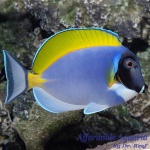

Powder Brown Tang
Price range: $99.99 through $199.99
Acanthurus japonicus
| Care Level | Moderate |
| Temperament | Semi-aggressive |
| Color Form | Red, Tan, Yellow |
| Diet | Herbivore |
| Reef Compatible | Yes |
| Water Conditions | sg 1.020-1.025, 72-78° F, dKH 8-12, pH 8.1-8.4 |
| Max Size | 8″ |
| Family | Acanthuridae |
| Minimum Tank Size | 125 gallons |
7-Day Guarantee
Approximate Purchase Size: Small: 1-2.5″; Medium: 2.5-3.75″; Large: 4-5″
Powder Brown Tang
Also known as the White-face Surgeonfish or Japan Surgeonfish.
The Powder Brown Tang is a graceful and beautifully marked surgeonfish featuring a deep chocolate-brown body, bright orange highlights and a distinctive white facial patch. Native to the reefs of the Indo-Pacific, this active swimmer is known for its constant grazing behavior and elegant appearance. Although moderately sensitive, a properly quarantined and conditioned Powder Brown Tang becomes hardy, adaptable and highly rewarding for intermediate to advanced reef hobbyists.
Key Features
Scientific Name: Acanthurus japonicus
Common Names: Powder Brown Tang, White-face Surgeonfish, Japan Surgeonfish
Adult Size: 8 to 9 inches
Lifespan: 10 to 12 years or more
Temperament: Semi aggressive, especially with similar-shaped tangs
Reef Compatibility: Reef safe and does not harm corals
Minimum Tank Size: 125 gallons
Experience Level: Intermediate to Advanced
Habitat and Tank Requirements
Natural Habitat:
Found along reef slopes, shallow coral zones and lagoon edges throughout the Western Pacific and Indo-Pacific. Feeds on filamentous and benthic algae.
Tank Environment:
● Wide open areas for constant swimming
● Moderate to strong water movement
● Plenty of rockwork for grazing
● Stable, mature systems recommended
Water Parameters:
● Temperature: 74 to 82°F
● Salinity: 1.023 to 1.025
● pH: 8.1 to 8.4
● Ammonia and Nitrite: 0 ppm
● Nitrate: under 20 ppm
● Alkalinity: 8 to 12 dKH
Essential Equipment:
● Protein skimmer rated for larger tanks
● High quality biological filtration
● UV sterilizer recommended
● Weekly 10 to 15 percent water changes
Diet and Feeding
Powder Brown Tangs are herbivores and thrive on continuous grazing.
Recommended Foods:
● Nori and seaweed sheets
● Spirulina flakes and algae pellets
● Marine algae blends
● Frozen herbivore formulas
● Enriched spirulina sheets
Feeding Schedule:
● Feed 2 to 3 times daily
● Offer nori on clips to support grazing instincts
● Maintain variety for health, immunity and coloration
Behavior and Compatibility
Temperament:
Semi aggressive and may challenge similar tangs, especially Acanthurus species. Generally peaceful toward unrelated reef fish.
Tank Mates:
● Wrasses, gobies, anthias, chromis, fairy wrasses
● Peaceful tang species only in large tanks
● Avoid aggressive surgeonfish
● Avoid predatory fish
Pairing Behavior:
Best kept singly unless housed in very large aquariums.
Reef Compatibility
Completely reef safe. Does not nip at corals, invertebrates or clams. Its steady grazing helps control nuisance algae.
Acclimation and Care Tips
Initial Acclimation:
● Drip acclimate for 45 to 60 minutes
● Float bag 15 to 20 minutes for temperature
● Reduce lighting during introduction
Health Considerations:
● Often prone to ich, velvet and stress
● Strongly recommended 2 to 3 week quarantine
Signs of a Healthy Specimen:
● Clean fins and clear eyes
● Bright white facial patch
● Active grazing and strong appetite
● Smooth scales and even coloration
Color and Development
Coloration Characteristics:
● Body: Deep chocolate brown
● Head: Distinct white patch along the face
● Dorsal and Anal Fins: Orange or red-orange streaking
● Tail: White to transparent with thin dark edging
● Markings: Subtle blue lining along fin borders
Color Intensity:
● High quality herbivore diet enhances contrast
● Proper lighting improves orange and blue highlights
● Stress may temporarily dull color vibrancy
Size and Growth:
● Juveniles begin around 2 to 3 inches
● Adults reach 8 to 9 inches
● Active swimmers requiring strong oxygenation and space
Special Considerations
Quarantine Recommended:
Important for ensuring parasite-free introduction and confirming feeding consistency.
Captive Bred Notes:
Captive bred Powder Brown Tangs are extremely rare; most specimens are wild collected but adjust well with proper care.
Breeding Potential
Captive breeding is extremely rare. Powder Brown Tangs spawn in open-water columns and require oceanlike space that is difficult to replicate in home aquariums.
Why Choose a Quarantined Powder Brown Tang
A quarantined Powder Brown Tang ensures better health, stronger feeding, reduced disease risk and easier acclimation. Its graceful movement, striking face patch and warm coloration make it a standout addition to large reef and FOWLR systems.
| Size: | Small, Med, Large |
|---|
Only logged in customers who have purchased this product may leave a review.
Related products
Reviews
There are no reviews yet.