


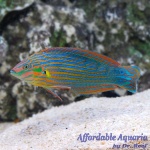
Leopard Wrasse
$139.99
Macropharyngodon meleagris
| Care Level | Expert Only |
| Temperament | Peaceful |
| Color Form | Black, Blue, Green, Orange, Red, Tan, White |
| Diet | Carnivore |
| Reef Compatible | Yes |
| Water Conditions | sg 1.020-1.025, 72-78° F, dKH 8-12, pH 8.1-8.4 |
| Max Size | 6″ |
| Family | Labridae |
| Minimum Tank Size | 90 gallons |
Live Arrival Guarantee
Approximate Purchase Size: Small: 1-2″; Medium: 2-3″; Large: 3-4″
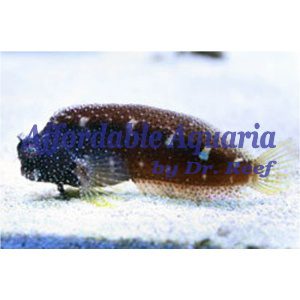
Leopard Wrasse
Also known as Dragon Wrasse (juvenile)
The Leopard Wrasse is a uniquely patterned species displaying intricate spotted markings resembling a leopard’s coat. This sand-dwelling wrasse requires specialized care but rewards dedicated aquarists with fascinating behavior and striking appearance.
Key Features
- Scientific Name: Macropharyngodon meleagris
- Common Names: Leopard Wrasse, Guinea Fowl Wrasse
- Adult Size: Up to 6 inches
- Lifespan: 3-5 years with proper care (can be challenging to maintain long-term)
- Temperament: Peaceful and reef safe
- Reef Compatibility: Reef safe
- Minimum Tank Size: 90 gallons minimum
- Experience Level: Advanced; requires specialized care
Habitat & Tank Requirements
- Tank Environment: CRITICAL: Requires minimum 2-3 inches of fine sand substrate for burying at night and when stressed. Provide live rock with caves but ensure open sand bed areas. Well-established tanks with mature sand beds and copepod populations are essential.
- Water Parameters:
- Temperature: 72-78°F (22-26°C)
- Salinity: 1.020-1.025
- pH: 8.1-8.4
- Pristine water quality absolutely essential
- Equipment Recommendations:
- High-quality protein skimmer
- Efficient filtration system
- Gentle to moderate water flow (not too strong)
Diet & Feeding
Leopard Wrasses are carnivorous microfauna hunters with specific dietary needs:
- Staples: Live copepods, live amphipods (essential for initial acclimation)
- Frozen Foods: Mysis shrimp, brine shrimp, cyclops, finely chopped seafood (once acclimated)
- Live Foods: Live blackworms, live brine shrimp, live copepods (critical during transition)
- Feeding Frequency: 3-4 times daily in small portions
- Special Note: Requires well-established sand bed with natural microfauna; may not accept prepared foods initially
Notes & Considerations
- Males display leopard-like spotted patterns in black and white or cream colors.
- Completely reef safe; will not harm corals but hunts beneficial microfauna.
- Buries completely in sand at night; this is normal behavior.
- DIFFICULT to acclimate and maintain; not recommended for beginners.
- Requires mature tanks with established copepod populations in sand bed.
- Often arrives emaciated; immediate access to live foods critical.
- May refuse prepared foods entirely; some specimens never adapt.
- Very sensitive to water quality and stress.
- Best kept as single specimens unless the tank is very large.
- Avoid aggressive tankmates that compete for food.
- Fine, sandy substrate is absolutely mandatory for long-term survival.
Why Choose a Quarantined Leopard Wrasse?
Purchasing a quarantined Leopard Wrasse is CRITICAL for success with this challenging species. Our specimens are carefully conditioned over weeks to accept prepared foods, are confirmed feeding consistently, and have gained healthy weight before sale. This extensive quarantine dramatically improves survival rates compared to recently imported specimens.
Only logged in customers who have purchased this product may leave a review.
Related products
Reviews
There are no reviews yet.